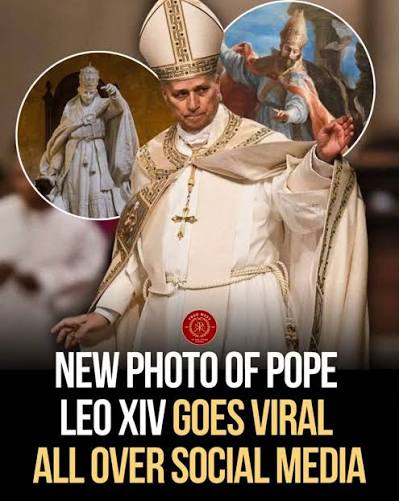
Sad to say Pope Leo has his knickers in a knot. On May 8, 2025 he became the First American-born pope in the history of the Catholic Church. He hadn’t been on the job too long before he discovered that his most immediate job was saving his new kingdom, Vatican City, from the jaws of bankruptcy. As of 2024, the deficit had ballooned to $94 million. It’s way more complicated than simply running out of money. Leo wears many different hats (although when you’re the Pope hats are called miters). Not only is he the Supreme Pontiff of the Catholic Church estimated to consist of about 1.42 billion Catholic world-wide, he is also the absolute ruler of the world’s smallest independent nation-state with complete civil and political authority.
Instead of greeting dignitaries, holding services, and waving from his balcony at the adoring crowds as previous popes did in more affluent times, he has to figure out a way to keep the Catholic Church from going broke in the face of statutory limitations. A major one is his lack of taxing authority. Living in Vatican City is a cushy proposition where residents pay no taxes. To make matters worse the Pope is barred from issuing bonds or making loans. Before you start planning a sojourn in Vatican-city, be aware that Vatican citizenship is doled out only to those who work at the “Holy See” (the central governing body of the Catholic Church) or their families. The only exceptions to these regulations are at the discretion of the pope.
Although individual donations, the money church-going Catholics plunk down at weekly mass, only represent 30% of total revenues, it’s an important slice of the pie and it’s been dropping like a stone since 2006. The same is true of other sources of income including ticket sales to the Vatican Museum and its investment and real estate portfolios.
With the advent of Pope Leo’s reign, the great minds behind the Vatican’s fundraising operation made a historic decision that had apparently been in the works since 2005 when Leo who was then head of the Order of Saint Augustine made a very bizarre departure from the “buttoned down” style of the Vatican by appearing at Game 1 of the World Series in Chicago where his hometown team the Chicago White Sox were playing. Afterward to accentuate the Vatican’s departure from normal protocol, Leo made a public show of wearing a White Sox baseball cap while going about his normal duties at the Vatican.
Can we conclude that the Pope’s “sudden” appearance on social media in 2026 as a devotee of his hometown heroes was no one off but involved years of planning and was, in fact, a well-orchestrated event that began two decades ago in 2005?
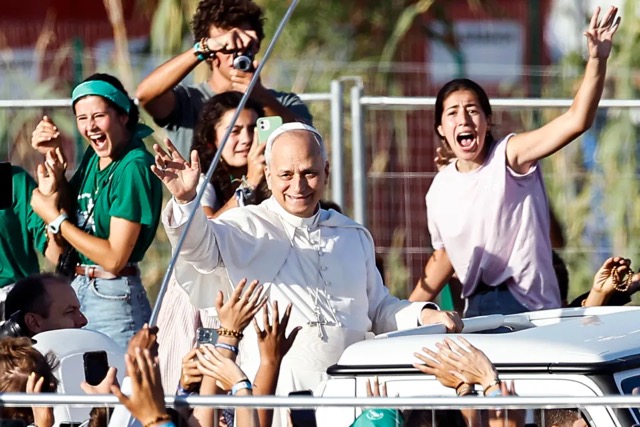
It was a big gamble turning to social media to solve two problems in the Vatican’s major market, the U.S. The first being the dwindling number of Catholics who attend mass (precipitous decline from 50% attendance in the 1970s to 17-29% in recent years) and the consequent shortfall in total individual donations and second the accelerating rate of young Catholics (50% of those younger than 30 and raised Catholic) making for the exits. [Pew Research Report]
Were the geniuses behind this push to invade pop culture proven right? Undoubtedly. Leo became the first Pope Influencer (i.e. person, in this case the Pope who has the power to build a dedicated following on platforms like Instagram, TikTok, YouTube, and X). He succeeded in heightening papal visibility with new user names, @Pontifex on X and @Pontifex – Pope Leo XIV or @pontifex (Latin name for bridge builder).
In 72 hours, he captured 13 million followers on Instagram. “It’s not just a social media account. It’s a global confession booth, a digital basilica, a space where millions are reaching out, hoping he’ll speak.” [Unnamed reporter]
Pope Leo’s debut on social media has achieved concrete results. U.S. Catholic churches are welcoming their highest numbers of new members in years. This past Easter, for example, some archdioceses recorded their highest number of new Catholics in two decades. Even more important and making his social media presence a game-changer has been its effect on young American Catholics. They call it “Leo Fever”, an answer to a prayer for a generation of young people who are looking for “community …for answers…a pope who speaks English—a polyglot pope, who can speak in a lot of different languages and who’s very straightforward in what he’s saying and what he’s inviting people to—is attractive.” [Katie McGrady, CNN Vatican Analyst].
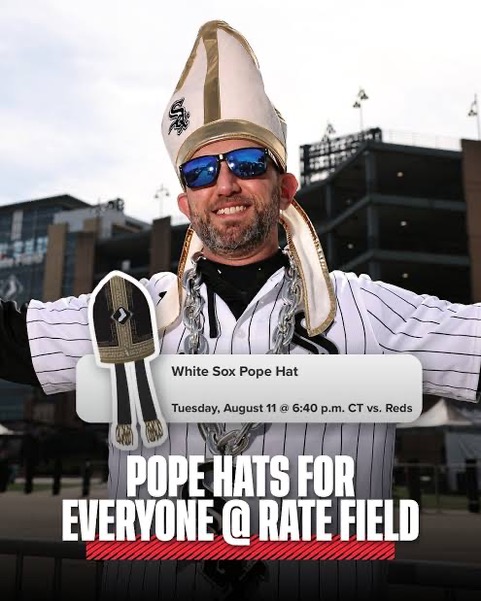
America being America “Leo Fever” was seen as a heaven-sent opportunity to make some dough. The White Sox were quick to take advantage. On August 11, 2026 they welcomed a sold- out crowd of 41,000. Each fan was given a team-branded (of course) papal miter [tall, pointed, ceremonial hat with two short flaps hanging down the back]. In the fifth inning, fans paused for a collective “peace be with you” stadium greeting. A nun threw out the ceremonial first pitch and the band ChiTown Popes performed a musical tribute to the pope. Covering all bases, the team later officially delivered a custom-made White Sox miter to Pope Leo at the Vatican.
But appearances can be, and in this case, may be deceiving. What his “new look” didn’t change and what he bought into was the hidebound policies of the Catholic Church like a male-only clergy and opposition to abortion.
How to come to terms with the contradictions that Pope Leo poses? On the one hand, he, apparently, with the blessing of his handlers in the Vatican, has openly criticized the “inhumane” treatment of immigrants under the Trump administration, calling the actions “inhuman” (and) “extremely disrespectful.”
How to square this with his answer to a reporter’s question: “What do you love about America?” “What America stands for the sense of freedom, of opportunity the sense of having invited people for generations from around the world to be part of America.”
He reiterated this theme in a prayer celebrating America’s 250th birthday. “I…ask God’s blessing upon America’s future… In these last 250 years for so many peoples throughout the world it was the firm resolve to achieve the noble vision of the nation’s founders that made America a byword for freedom as the country opens its doors to successive waves of immigrants enabling them and their children to play their part in shaping the future of the nation… The moral greatness of a nation is manifested above all in its capacity to support, protect and cherish the lives of all especially its most vulnerable…”
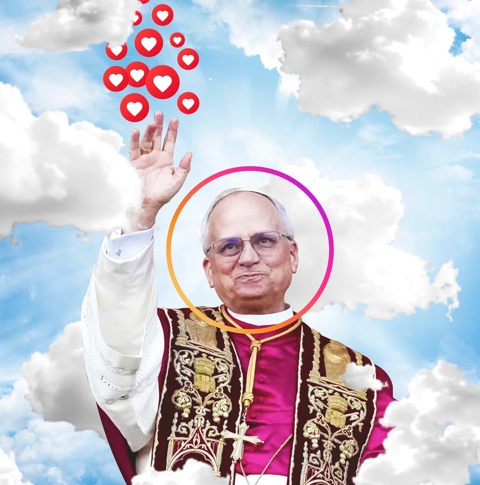
Although Pope Leo has the bipartisan respect and affection of the majority of American Catholics, his accession to the Papacy still leaves one unanswered question. Was his public relations coup on social media carefully engineered as part of a marketing effort to breathe new life into the Vatican’s survival? After all, U.S. Catholics are the Vatican’s biggest source of individual donations. What better way to keep American Catholics interested, particularly young American Catholics, than in creating a Pope influencer. Unknown is how much Pope Leo had to do with his debut as a media star or was the path brilliantly and artfully prepared for him?
Consider this: in Leo the Vatican has a leader whom the overwhelming majority (8 out of 10) of Catholics world-wide revere. On the other hand, he poses no threat to the Vatican hierarchy and whole heartedly supports old fashioned and outmoded doctrines like a male-only clergy, an unwavering anti-abortion stance, a refusal to become more inclusive by clinging to the definition of marriage which only includes the union of a man and woman.
Does the Vatican have a deep state making the decisions? Judge for yourself.