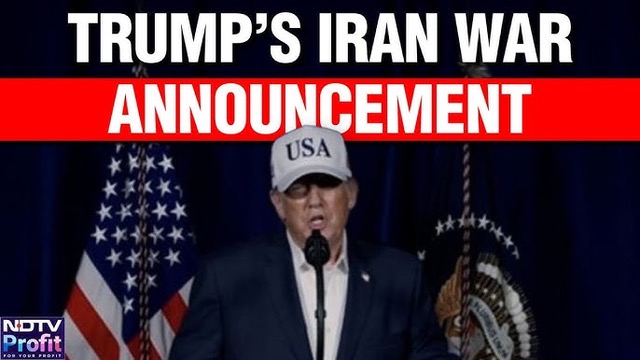
On March 28, 2026, POTUS announced to a war-weary American electorate and the rest of the world—”The U.S. military began major military operations in Iran. The U.S. military has undertaken a massive and ongoing operation to prevent this very wicked, radical dictatorship from threatening America and our core national security interests…
A brief look down the historical runway.
In 2016, as he was campaigning for the presidency (his first term) he made the America First pledge to his MAGA base—”We will stop racing to topple foreign – and you understand this – foreign regimes that we know nothing about, that we shouldn’t be involved with.”
In 2020 he doubled down on that promise—”We’ve spent $8 trillion in the Middle East, and we’re not fixing our roads in this country?… How stupid is it? And we’re not fixing our highways, our tunnels, our bridges, our hospitals, even.”
In 2024, at every campaign stop on the way to his second term, he described himself as the “president of peace” and diving deeper into delusion predicted that he would end the Ukrainian conflict within “24 hours.”
Even before his presidential ambitions surfaced, he was busy singing the same tune. In 2011, Obama was his target—”Our president (Obama) will start a war with Iran because he has absolutely no ability to negotiate. He’s weak and he’s ineffective.” Same war, different president.
He reiterated his “president of peace” mantra in his November 2024 victory speech—”I’m not going to start a war. I’m going to stop wars,” A year after entering the White House, he sent the military to Venezuela, Yemen, Nigeria, Syria, Somalia, currently Iran in addition to his strikes on boats in the Pacific and Caribbean that have resulted in the deaths of well over 100 innocent civilians. Putting icing on the cake in a Truth Social post on March 6, Trump boasted that “Cuba would be next.”
And let’s not forget his fantastical plan to seize (aka annex) Greenland “We need Greenland from the standpoint of national security…It’s so strategic…
With President Trump reaching new heights of lunacy, his every utterance betraying a man who has left the real world for a private paradise where does that leave most Americans? Can they mount the enthusiasm and energy to challenge their government’s misdeeds in the streets of major cities? Will it make any difference? Subjects we’ll tackle in this post. But first a brief look at the highways and byways of the empire’s history of mindless aggression against countries they foolishly and tragically thought would be “pushovers” for a US takeover either by regime change or total destruction. One has only to remember the long history of unsuccessful invasions of Vietnam, Afghanistan (20 years of failed war making), Libya (destroying a thriving economy) and Iraq (murdering the sovereign leader and never finding the illusory WMD’s) and it becomes apparent that the current emperor’s conduct of foreign policy is part of a “grand” old American tradition.
How have people responded to these blunders? In past failed wars of aggression Americans had a rich history of displaying their disagreements with the empire’s power elites.
Americans are not a particularly warlike people, although they do have their moments of blood thirsty enthusiasm for one or another of the empire’s wars of choice. At least initially, at the first hint of war, cries of “USA, USA” dominate the news media and are celebrated by the Washington elites as a stirring affirmation of American democracy at work. That moment passes as the body bags start arriving at Dover Air Force base in Delaware. Chants of “USA, USA” transmogrify into “Hell, No We Won’t Go” But even with the threat of mandatory service gone the way of 23 skidoo (aka get lost), Americans quickly saw how wars were the BFFs of the 1% who amplified their fortunes while the 99% did the fighting and dying and saw their lives upended by the economic consequences of another “glorious war”.
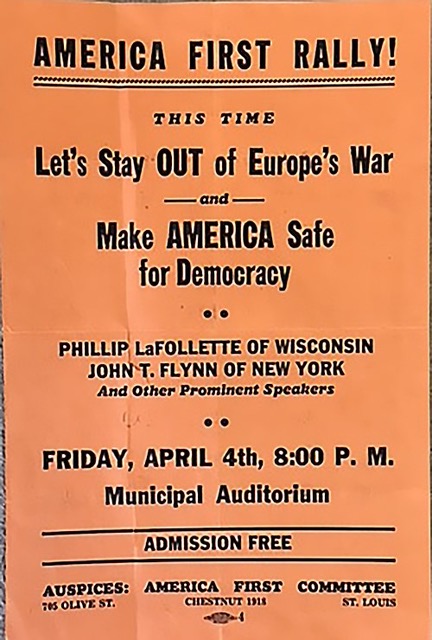
Americans have a rich history of going public with their protests against the wars of choice the US has started. Lest you think the coming of age of twenty-first century young people was the great awakening, over ninety years ago US student activism was alive and well as hundreds of thousands of students participated in anti-war demonstrationss, protesting the gathering war clouds of World War II, a repeat of World War I.
Even World War II saw its share of protest activity particularly before the Pearl Harbor attack in December, 1941. “The Yanks Are Not Coming” argued thousands of demonstrators gathered in cities like Los Angeles and New York for peace rallies opposing American involvement in European conflicts. The Korean war which President Truman dragged the US into in 1950 saw relatively tame protests unlike the vigorous protests which accompanied succeeding wars. Polling indicated that although 36,574 (US Department of Defense) young Americans died while fighting in a civil war that was none of America’s business, public opinion remained closely divided with slightly more than half (56%) thinking the war was not worth fighting. What happened in that war to the self-described most powerful armed forces in history was repeated in all subsequent wars the US started. Despite destroying most of North Korea, the U.S. was unable to achieve victory. President Eisenhower was forced into an armistice to stop the slaughter of American troops.
The Vietnam War was a high-water mark in Americans taking to the streets to vent their outrage. The demonstrations started mainly on college campuses to protest the draft (1.8 to 2.2 million American men were drafted from 1964 to 1973) “No, No, We Won’t Go” became a popular refrain. As the revulsion against the senseless brutality that highlighted US conduct of the war (for example the 1968 US massacre of 300 unarmed old men, women and children in the Vietnam village of My Lai), protests against the war multiplied. On November 15, 1969 a massive demonstration, Moratorium to End the war in Vietnam, was attended by over 500,000 anti-war activists in cities throughout the country and the world. Other demonstrations and rallies occurred including 50,000 people who stormed the Pentagon on October 21, 1967.
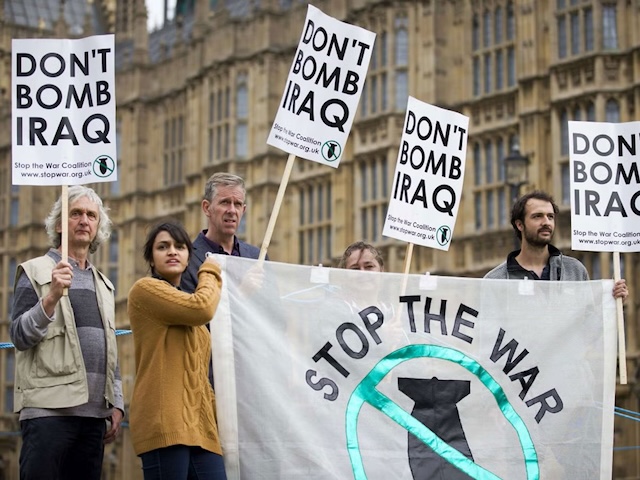
Before the United States invaded Iraq in 2003, many Americans knew Iraq had no weapons of mass destruction as the politicians including the president were claiming. They also knew that the US government, along with its vassals (the UK being the most outspoken cheerleader) were lying us into this war. On February 15, 2003, millions of people in 600 cities worldwide took to the streets to protest. In NYC 200,000 demonstrated outside the U.N., three million in Rome, 750,000 in London. Protests be damned the U.S went on to fight and lose) this misbegotten war.
Which brings us to the present catastrophe —a war of aggression against Iran (according to international law a war of aggression is “the supreme international crime”— American Justice Robert Jackson, chief prosecutor at Nuremberg). Using the now familiar American playbook —a surprise attack war launched in the midst of peace negotiations on a country (Iran) that was negotiating in good faith, the US attacked Iran on February 28.
The war has been going on for over a month and the streets of most American cities are eerily quiet. It appears that many Americans are okay with this latest example of misdirected U.S. aggression. The polls bear this out. According to a March 9 Quinnipiac University National Poll only 53% of voters oppose the war against Iran, while 40 percent support it. New polls (3/26) show that opposition to the war has remained steady despite the economic pain Americans are feeling.
After the Vietnam war and the end of the draft, the participation of young people, the main drivers of the peace movement, dwindled. An organized youth movement against the war on terror (2001) never really materialized. Why, you may ask? Reasons abound. Since 1973 when Nixon abolished the draft, those of draft age no longer fearing Uncle Sam’s clarion call, have turned to other what they consider more personal and immediate problems. Student loan debt being numero uno for over one-half of students today. These unfortunates owe an average of $32,000-$40,000. In the Vietnam era, the average student debt was $1,100 ($7,500 in today’s dollars). Burdened with a mandatory loan payment that averages $400+ monthly, the fate of a war fought thousands of miles away is hardly a major worry. Besides these young people have heard war drums beating since they were born. The empire had already started (and lost) two major wars (Afghanistan and Iraq) and at least four “little” wars (Syria, Libya, Somalia, Yemen) Another war in a country most of them couldn’t find on a map? Not interested. Finally like the majority of American adults they have other worries closer to home —the stratospheric costs of healthcare, the rising cost of food, the unaffordability of housing, the difficulty of living in a country controlled by 950+ billionaires with the highest level of income inequality among G7 nations as well as among the most unequal developed countries in the world.
What’s the problem, you may ask, of living in a country addicted to war with a president who has jumped the shark and descended into “malignant narcissism” (phrase coined by Eric Fromm to describe Hitler).In America’s unending pursuit of guns over butter with a trillion-dollar war chest (soon to be $1.5 trillion) militarized foreign policy has permeated our domestic policy. Storm troopers are loose on American streets, masked and armed to the teeth whose brutality has already caused the deaths of two Americans peacefully protesting the invasion of brutalized “policing” in their city. How about Trump’s Secretary of Defense who calls himself the Secretary of War describing the U.S. negotiating strategy under Trump— “when he [Trump] sends his war fighters out…he unties their hands [getting rid of such pesky regulations as the Geneva Convention and International Law]… to destroy the enemy as viciously as possible… We negotiate with bombs…” On the domestic side, although only about 7% of the general U.S. population are veterans, 20% are in domestic police forces across the U.S. many of them drawing on their foreign military service to handle community law enforcement.
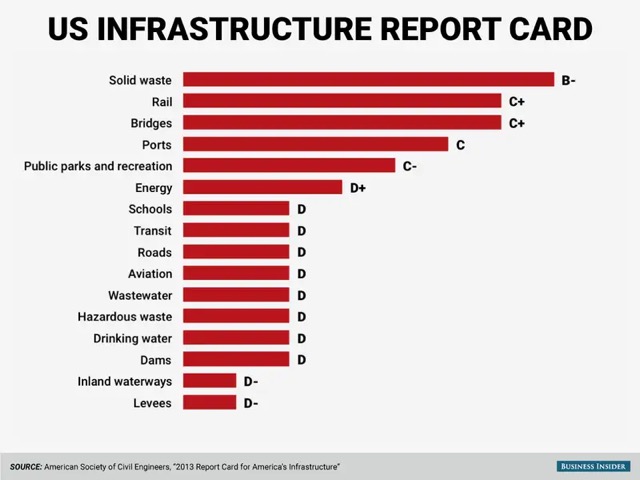
Even before this calamitous show of unprecedented aggression, since 9/11 every U.S. president has been a war monger choosing to finance aggressive foreign policy goals over social welfare policies like universal healthcare, fixing America’s shabby infrastructure, providing free education for every American student, tamping down out of control costs in housing and every other aspect of Americans’ daily life.
We are all affected by U.S. leaders’ normalization of invasions into other countries (Venezuela and Iran current examples) in the form of preemptive war.
Ron Paul saw the danger of a continuous drift of U.S leaders into the madness of war over a decade ago in 2012 in his Farewell Address to Congress:
Undeclared wars are commonplace. Tragically our government engages in preemptive wars with no complaints from the American people. Sadly, we have become accustomed to living with the illegitimate use of force by government. To develop a truly free society the issue of initiating force must be understood and rejected. We ignore him at our peril.
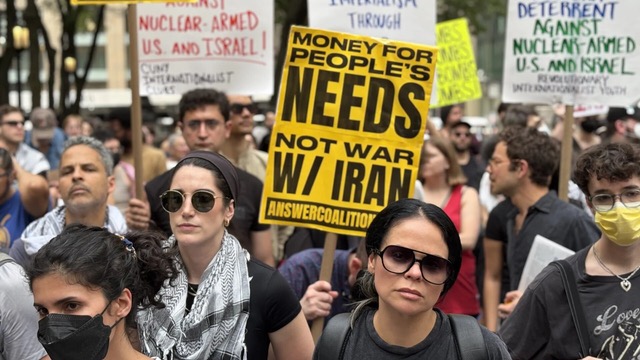
P.S. On March 29 and March 30, the American people saw the cliff their leaders were driving them over and hit the streets protesting violence and war both oversea and domestically. Millions assembled in towns and cities across the U.S. in peaceful protests. What they want is what most Americans want — leaders committed to peace and justice across the globe. It would be quite a change after decades of wrongheaded decisions made by leaders whose only mission is to create an American empire and enrich their cronies. The Doomsday Clock is set at 85 seconds to midnight. We haven’t much time to save the planet.